
Investor confidence has evaporated amid fears over the rising cost of funding India's gaping current account deficit, prompting New Delhi to delay plans to raise much-needed funds through partial privatisations, finance ministry sources said.
.jpg)
India has in recent months stepped up enforcement of tax collections as it looks to raise revenue to help plug its widening fiscal deficit.

The Reserve Bank of India announced measures late on Monday to curb the rupee's decline by tightening liquidity.

Media has raised the issues that new pricing to benefit Reliance Industries.

Rupee, he said, is not in shambles and "we should not be overtly pessimistic".

India's record current account deficit has been a key reason behind why Standard & Poor's and Fitch Ratings cut their outlooks on the country's sovereign rating to 'negative' last year.

Mayaram said the concerns over the pace of implementing economic reforms were "overstated".

Keeping that much money out of the banking system has created a liquidity deficit that has forced banks to borrow as much as RS 1.6 trillion from the central bank to meet daily funding needs.

His officials are working on a series of steps to attract at least $20 billion in new investment to fund the deficit without depleting India's $300 billion in forex reserves.
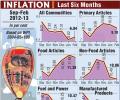
The wholesale price index, the main inflation indicator, rose an annual 6.84 per cent in February, higher than the 6.54 per cent rise estimated by analysts.

The FinMin has built up a cash surplus of about Rs 80,000 crore.
 © 2025 Rediff.com - Investor Information - Advertise with us - Disclaimer - Privacy Policy - Sitemap - Feedback - About us - Terms of use - Grievances